Home office fire safety
Chargers, extension leads, and smoke, heat and carbon monoxide alarms: what fire services and Electrical Safety First advise, and the alarm rules in England, Scotland and Wales.
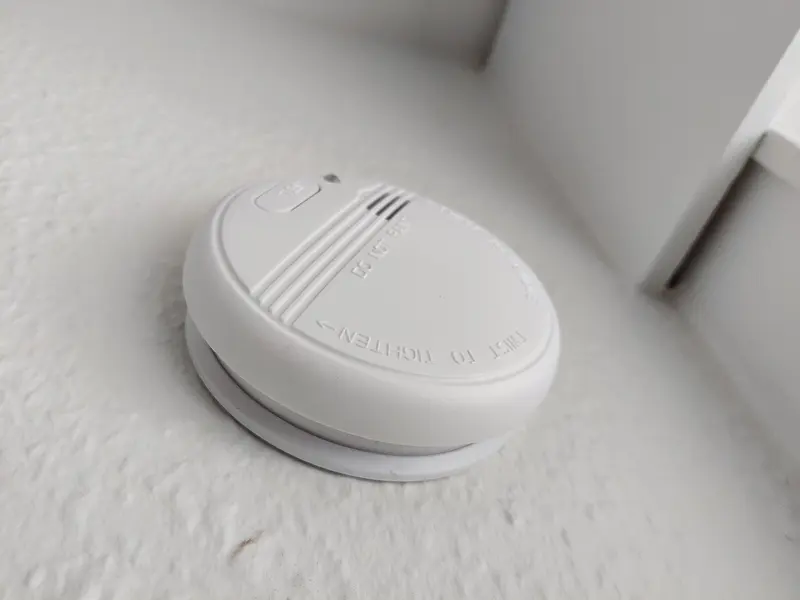
A home office adds chargers, extension leads and devices with lithium-ion batteries to a room that was never designed as an office. Here is what fire and electrical safety organisations advise.
Chargers and laptop batteries
- Use the charger that came from the maker, or an official replacement from a reputable source (Electrical Safety First; Scottish Fire and Rescue Service).
- Charge on a hard, flat surface — not on a bed, a sofa or under pillows, which trap heat (Electrical Safety First).
- Unplug chargers when you’ve finished, and don’t leave devices charging longer than necessary (Electrical Safety First).
- The Scottish Fire and Rescue Service advises not charging batteries while you’re asleep or away from home, not charging in hallways or shared areas that are escape routes, and not covering a charger, battery or device while it charges.
- Stop using or charging a device whose battery swells, gets hot or smells unusual (SFRS). Electrical Safety First says dropped, crushed or punctured batteries can become volatile.
- Register your laptop with its maker, so you can be told about a safety recall (Electrical Safety First).
Sockets and extension leads
- Don’t overload sockets, and don’t plug one extension lead or adaptor into another. If a cable won’t reach, move the desk or equipment closer instead (Electrical Safety First: home office).
- Keep the total on any extension lead within 13 amps, and avoid using extension leads long term (SFRS). See surge protectors and UPS units: the basics.
- Store cables neatly so nobody trips.
- Don’t ignore burn marks, buzzing or crackling sounds, or fuses blowing: unplug and contact the retailer, the maker or a qualified repairer (Electrical Safety First).
- Switching off at the socket and pulling out the plug is the only way to be sure something is off (SFRS).
Smoke, heat and carbon monoxide alarms
General advice from fire and electrical safety organisations:
- Electrical Safety First says there should be at least one smoke alarm per floor, with a heat detector in the kitchen, tested regularly — ideally every week.
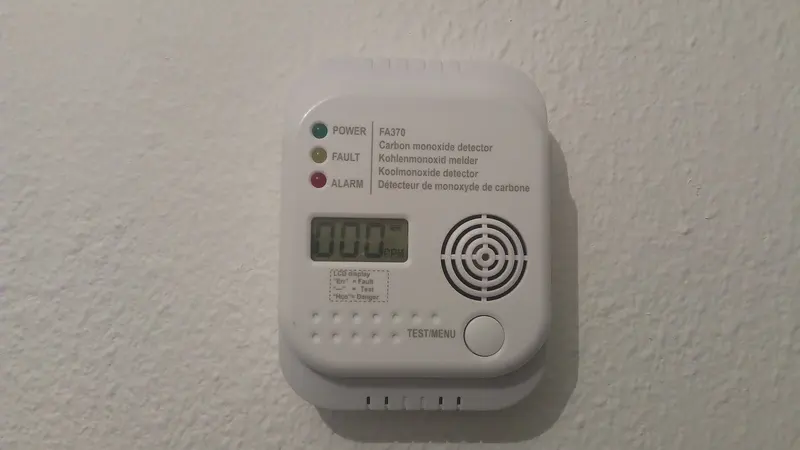
- The Scottish Fire and Rescue Service says to test smoke alarms weekly, never take the batteries out or paint over an alarm, and replace each smoke and heat alarm every ten years. It says carbon monoxide (CO) alarms should be used if you have heating or cooking appliances that burn gas, coal, wood or oil.
- Follow the maker’s instructions on where to fit an alarm. GOV.UK’s guidance for landlords says smoke alarms generally go on the ceiling in a circulation space such as a hall or landing, and CO alarms at head height about 1 to 3 metres from a potential source.
The law on alarms differs across the UK
Scotland — all homes. Since February 2022, the Scottish Fire and Rescue Service says every home needs a smoke alarm in the living room or the room you use most, a smoke alarm in every hallway or landing, and a heat alarm in the kitchen, all mounted on the ceiling and interlinked so that when one sounds they all do. Sealed-battery or mains-wired alarms are both allowed. Homeowners are responsible; tenants should speak to their landlord (SFRS: smoke and heat alarms).
England — rented homes. Since 1 October 2022, private and social landlords must make sure there is at least one smoke alarm on each storey used as living accommodation, and a CO alarm in any room used as living accommodation that has a fixed combustion appliance (gas cookers are excluded). They must repair or replace alarms once told they are faulty, and check alarms work on the day a new tenancy starts. Councils can fine landlords up to £5,000. GOV.UK says these regulations don’t apply to owner-occupiers (GOV.UK guidance).
Wales — rented homes. Under the Renting Homes (Fitness for Human Habitation) (Wales) Regulations 2022, landlords must make sure there is a working smoke alarm on each storey, connected to the electricity supply and linked to the other mains smoke alarms, and a CO alarm in each room with a gas appliance, an oil-fired appliance or a solid-fuel burning appliance.
Northern Ireland. nidirect advises smoke alarms on every floor, tested weekly. Check nidirect for the rules that apply to landlords.
Alarms in the kit guide
Our alarms list includes optical smoke alarms, a kitchen heat alarm and CO alarms with sealed 10-year batteries, and wireless-interlinked alarms from FireAngel and Aico. Check that an alarm meets the rules where you live — for example, Scotland’s rules need alarms to be interlinked.
Papers and backups
Fire doesn’t only threaten the laptop. Keep a backup of your files away from home (see the 3-2-1 backup rule) and consider a fire-resistant safe or chest for papers you can’t replace.
Sources
- Electrical Safety First: Keeping your home office safe (checked 6 November 2026)
- Electrical Safety First: Laptops and notebooks (checked 6 November 2026)
- Electrical Safety First: Your questions answered (checked 6 November 2026)
- Scottish Fire and Rescue Service: Electrical safety (checked 6 November 2026)
- Scottish Fire and Rescue Service: Lithium-ion batteries (checked 6 November 2026)
- Scottish Fire and Rescue Service: Smoke and heat alarms (checked 6 November 2026)
- GOV.UK: Smoke and Carbon Monoxide Alarm (Amendment) Regulations 2022 — guidance (checked 6 November 2026)
- Renting Homes (Fitness for Human Habitation) (Wales) Regulations 2022, regulation 5 (checked 6 November 2026)
- nidirect: Fire safety and prevention (checked 6 November 2026)
Checked 6 November 2026.