Working from home and home insurance: what to check
Working from home? Your home insurance may not cover work equipment, business use or work visitors. What official sources say and what to ask your insurer.
We are not an insurance company or broker and don’t give insurance advice. This guide explains general rules from the official sources listed at the end. It isn’t advice about your own policy: what you’re covered for depends on your policy wording, so check it, or ask your insurer or an FCA-authorised broker.
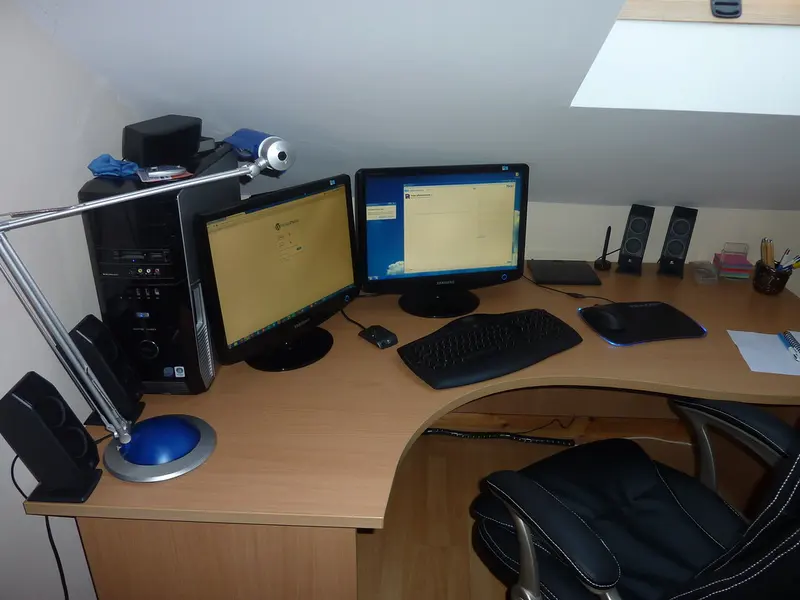
Lots of people now work from home for some or all of the week, and plenty of pupils and students do their homework on laptops that would cost a lot to replace. It’s easy to assume your home insurance looks after all of it. It might — or it might not. This guide sets out the general points from official sources, so you know what to look for in your own policy and what to ask.
What home insurance is usually made up of
The Financial Ombudsman Service describes home insurance as usually having two main parts: buildings cover for the structure of your home, and contents cover for your possessions, such as your TV, furniture and clothes.
A laptop, printer or monitor that you own is one of your possessions, so contents cover is where to look first. But don’t stop at the headline. Check the policy wording for:
- whether there is a limit on any single item, and whether a laptop or phone counts as a “high-value” item;
- whether accidental damage (a dropped laptop, a spilled drink) is included or is an optional extra;
- whether anything is covered when you take it out of the house — to the office, school, college or a café;
- what the policy says about equipment used for work or business.
Work equipment may not be covered
GOV.UK’s guide to running a business from home is blunt about this: it warns that home insurance may not cover your business, and gives stock, computers and customers visiting your premises as examples. It suggests you may need business insurance as well.
If your employer gave you the laptop, it belongs to your employer. Ask them how it is covered and what you should do if it is lost, stolen or damaged. The Health and Safety Executive says employers have the same health and safety responsibilities for home workers as for anyone else, that any equipment they provide must be safe and suitable, and that if an assessment shows a worker needs equipment, the worker cannot be charged for it (HSE: protect home workers).
Why the insurer’s questions matter
When you buy or change a home insurance policy, the law expects you to take care with your answers. The Consumer Insurance (Disclosure and Representations) Act 2012 says it is the consumer’s duty “to take reasonable care not to make a misrepresentation to the insurer”. It also says that if the insurer asks you to confirm or update details you gave before and you don’t, that can count as a misrepresentation.
In plain terms:
- answer the questions on the application carefully and honestly;
- read the details your insurer sends at renewal, and correct anything that is wrong or out of date;
- if something has changed — you now work from home most days, you’ve started a business, clients visit, or you keep stock at home — check what your policy says you need to tell the insurer, and ask if you’re not sure.
The Financial Ombudsman Service lists a common kind of complaint where the insurer says the customer carelessly or deliberately didn’t give the true replacement cost of their contents (sometimes called underinsurance). When you add up what your contents would cost to replace, remember the work kit you’ve bought for the home office.
Questions to ask your insurer or broker
These are questions, not answers — only your insurer can tell you what your own policy does.
- Does my contents cover include equipment I use for work? Is there a limit per item?
- Is my laptop covered away from home, and is accidental damage included?
- Do I need to tell you that I work from home? Does it matter if I run a business, keep stock or have clients visit?
- Is anything excluded because it is used for business?
- If I need business insurance as well, what would it cover that my home policy doesn’t?
Mortgage lenders, landlords and business rates
If you run a business from home, GOV.UK says you may need permission from your mortgage provider or landlord, and sometimes from your local council or planning authority — for example if lots of customers or deliveries will come to the house. You may also have to pay business rates on the part of your home used for the business, depending on whether it has been given a rateable value.
Check who you’re dealing with
If you do buy cover, the Financial Conduct Authority says to use its Firm Checker before you buy a financial product such as insurance: check the firm is authorised, that it has permission for what you want, and that its contact details match the FCA Register (fraudsters set up “clone firms” that copy genuine ones). If you use a firm that isn’t authorised, you won’t be able to complain to the Financial Ombudsman Service and won’t be protected by the Financial Services Compensation Scheme if it fails. The FCA explains how to check a firm.
At renewal time, it’s worth knowing that since 1 January 2022 the FCA’s rules say the renewal price for home insurance must be no higher than you would pay as a new customer, and firms must make it easier to stop automatic renewal.
If something goes wrong
If you’re unhappy with how an insurer has dealt with you, complain to the insurer first. The Financial Ombudsman Service says insurers have to give their final response within 8 weeks for most types of complaint; after that, or if you’re unhappy with the answer, you can take it to the Ombudsman.
Protecting the kit itself
Insurance only helps after something has gone wrong, and only if you’re covered. A few simple steps reduce the chance of losing work in the first place:
- keep backups of your files — see the 3-2-1 backup rule;
- plug the desk into a surge-protected lead or UPS rather than a block adaptor;
- lock a laptop that stays on a shared desk — see laptop locks;
- keep important papers in a fire-resistant safe or chest, and fit smoke and CO alarms.
Buying kit doesn’t change what your insurance covers. If your insurer asks about locks, alarms or safes, answer accurately.
Sources
- Financial Ombudsman Service: home insurance (checked 6 November 2026)
- Financial Ombudsman Service: underinsurance (checked 6 November 2026)
- GOV.UK: Running a business from home (checked 6 November 2026)
- HSE: Protect home workers (employers) (checked 6 November 2026)
- HSE: Display screen equipment for home workers (checked 6 November 2026)
- Consumer Insurance (Disclosure and Representations) Act 2012, section 2 (checked 6 November 2026)
- FCA: How to check a firm or individual is authorised (checked 6 November 2026)
- FCA press release: measures to protect customers from the loyalty penalty (28 May 2021) (checked 6 November 2026)
Checked 6 November 2026.